

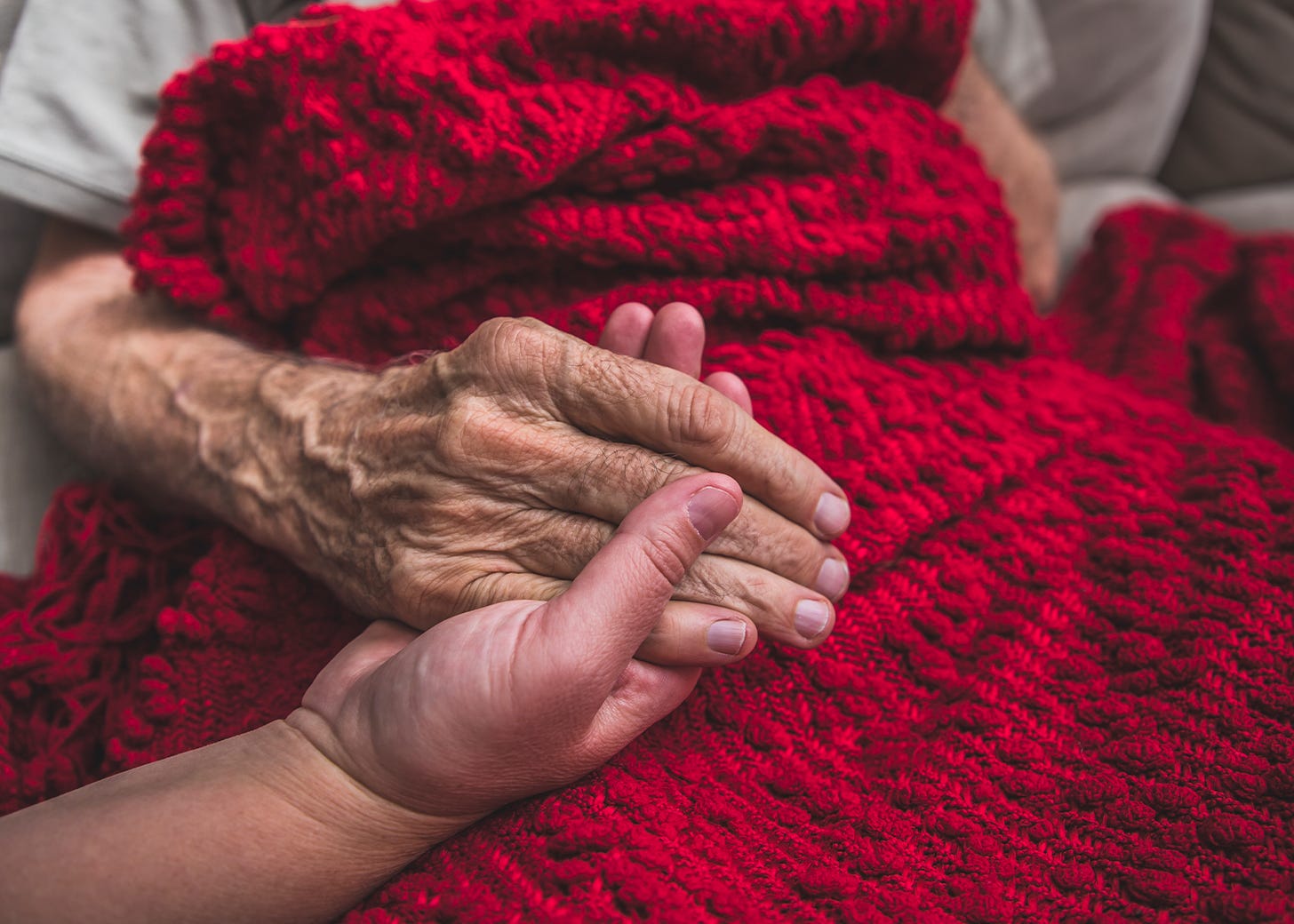
by Suzanne B. O’Brien, RN
There’s something I’ve known since the very beginning of my career — before I had the language for it, before I had the experience to explain it.
I felt it.
With my very first patient who died.
I was a new nurse, standing in a hospital room that felt like every other — white walls, fluorescent lights, machines humming in the background. Clinical. Sterile. Quiet in that artificial way hospitals often are.
She was alone.
And yet… she wasn’t.
Because in the moment that she was transitioning, as she took her last breaths, something happened.
The room changed.
The energy shifted in a way I had never felt before. Profound. Peaceful. Almost sacred.
It stopped me in my tracks.
No one had taught me this part. There was no charting language for it. No clinical explanation.
But I knew, without question: There was nothing to fear here.
What I Discovered After 1,000 End-of-Life Experiences
That moment became the beginning of a journey that would shape my life.
I went on to become a hospice nurse, an oncology nurse, and eventually a pioneer in the global death doula movement, sitting at the bedside of over 1,000 people at the end of life.
And I can tell you this: What I felt in that very first room was not an exception.
It was the truth.
I have witnessed:
Profound peace in the final weeks, days and hours
Moments of deep connection between loved ones
A natural unfolding that feels guided, not chaotic
And again and again, a sacredness that is almost impossible to describe, but unmistakable when you experience it
If more people knew what I have seen, they would not be afraid of death.
And that’s why I’m telling you.
Death Was Never Meant to Be Feared
For most of human history, death wasn’t something we feared.
It was something we understood.
People died at home. Families gathered. Children were present. Communities supported one another.
There were rituals — not to “fix” death, but to honor it.
Death was seen for what it is: a natural transition, a sacred rite of passage, a part of life.
The Moment Everything Changed
About 100 years ago, death left the home and moved into institutions.
Hospitals. Medical systems. Behind closed doors.
And while modern medicine has brought incredible advancements, in that shift, we lost something essential.
Death became:
Medicalized
Hidden
Isolated
And unfamiliar
And what we don’t understand, we begin to fear.
Fear Was Never About Death
Fear didn’t come from death itself.
It came from our disconnection from it.
When we stop…
Seeing death
Talking about it
Understanding it
Participating in it
… it becomes unknown. And the unknown is where fear lives.
This is why today:
Death is avoided in conversation
Families feel unprepared
Grief is often rushed or minimized
And dying is treated like a failure instead of a natural part of life
But this isn’t the truth of death.
It’s the result of forgetting.
What We Lost — and Why It Matters
When we lost our connection to death, we also lost:
The understanding of how to care for someone at the end of life
The rituals that helped us process grief
The communal support that held families through loss
The profound teaching about life that people at the threshold often share
The recognition that this moment is sacred
Without these, people are left navigating one of life’s most profound experiences without a map.
And that’s where fear takes over.
Bringing Death Back to Where It Belongs
The truth is — death hasn’t changed.
We have.
And the good news is, we can remember.
We can:
Talk about death openly
Bring presence back into the dying process
Support families with education and compassion
Reintroduce ritual and meaning
Honor this time as the sacred transition it is
Because when we understand death, we don’t just fear it less.
We live differently.
What My Patients Have Taught Me
After more than 1,000 end-of-life experiences, I can tell you this.
Death is not what people think it is.
It is not something to be feared.
It is something to be understood… honored… and even, in many ways, trusted.
Because the most consistent thing I have witnessed is this: There is a natural intelligence to the dying process.
And when we stop resisting it… when we support it instead of fear it… there can be profound peace.
That very first patient taught me something I have spent my entire career confirming:
Even in a sterile hospital room… even when no one else recognizes it… death is still sacred.
We just have to remember how to see it.
Suzanne shares the 7 core truths that emerge at life’s end in her exclusive online event with The Shift Network. Learn more here.
Suzanne B. O’Brien, RN, is a speaker, author, elder advocate, and wellness warrior. Suzanne spent most of her nursing career in hospice care and oncology care, and in 2008, began offering free community educational seminars at her local library to teach families how to care for their loved ones at the end of life. In hospice care, the nurse manages the care of the dying patient and teaches the family how to do the same. It is far from successful, due to the overwhelming fear of death (the number one fear in the U.S.) and how late in the dying process people commonly receive hospice services. Seeing this systemic break and the compounded amount of suffering it causes fueled Suzanne’s passion to help teach families the life-changing skill of how to care for their loved ones before the need actually arises. This training and concept proved so successful that Suzanne now travels to communities, offering training in person and on live webinars so that people around the world can attend. She was named a “Worldwide Leader In Healthcare” in 2016 by The International Nurses Association for her humanitarian work.